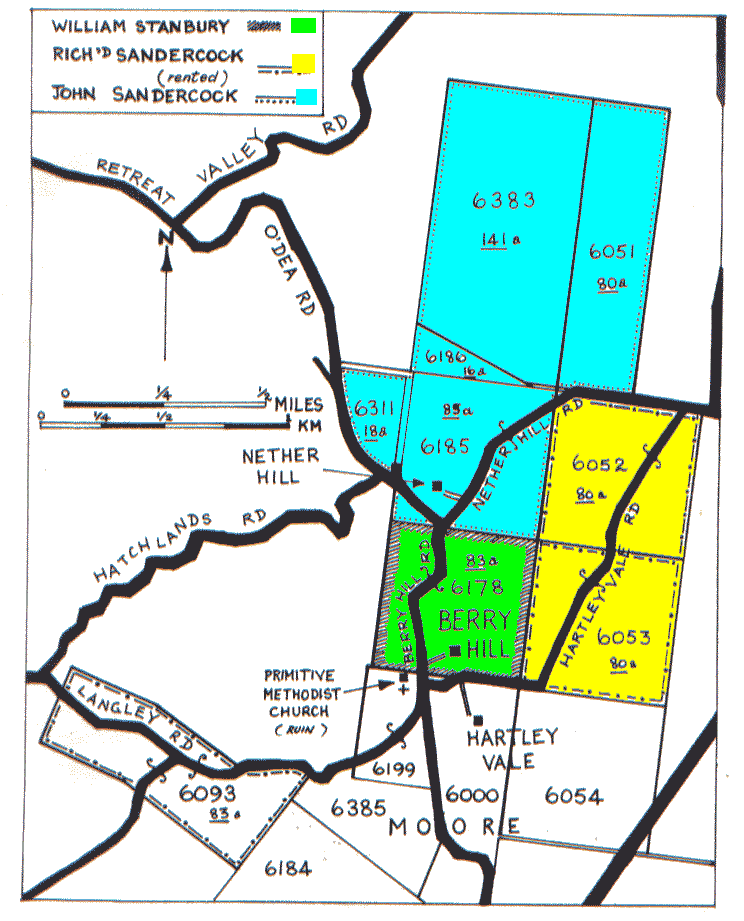
John and Emily (nee Bond) Sandercock lived close to ‘Netherhill’ on a farming property called ‘Berry Hill’ – known in later years as ‘Latch Cottage’. They purchased ‘Netherhill’ on the 6th July 1898 when they expanded their agriculture holding. At this stage, ‘Netherhill’ totalled 340-acres and came in several sections (section 6185 of 85-acres that included the house and all farm buildings; section 6383 of 141-acres; section 6051 of 80-acres; section 6186 of 16-acres and section 6311 of 18-acres).
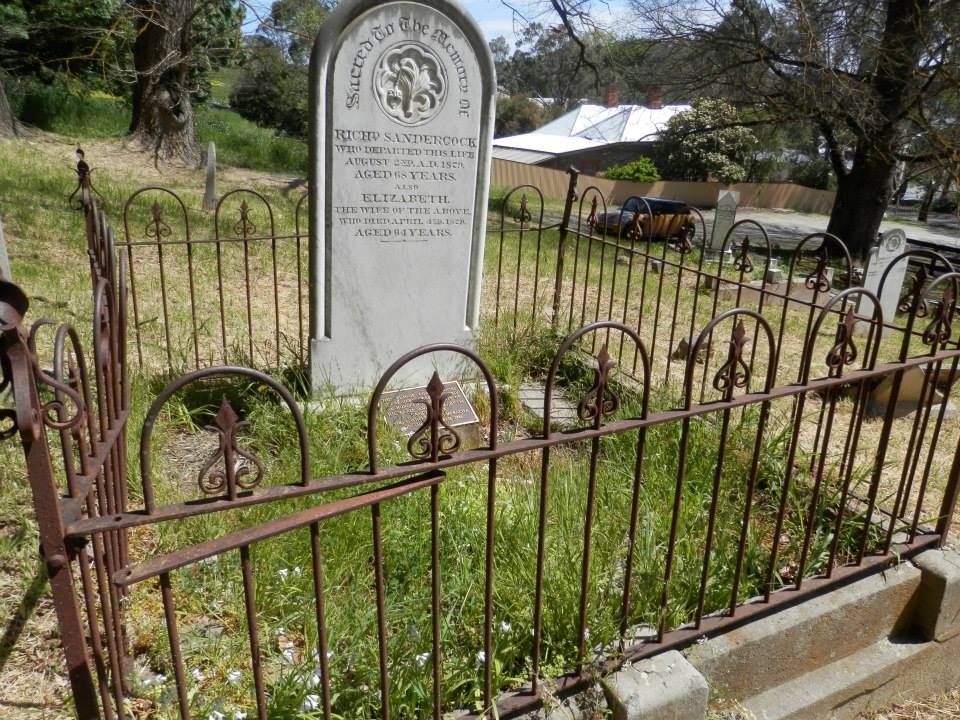
John was the youngest Sandercock child in a family of 11 children. Being a first-generation Australian, he was born at the ‘Berry Hill’ property in 1859. His parents, Richard and Elizabeth (nee Stanbury), had emigrated from Cornwall in 1853 with a growing family of eight surviving children (of nine). The youngest being just three-months-old when they set sail. In Cornwall, Richard had worked as an agricultural labourer and had been a prize-winning wrestler.

(Above, Berry Hill 1870)
Elizabeth’s father, William Stanbury, was already established as a land-holder at Kenton Valley. He had received a land grant and acquiring the ‘Berry Hill’ property in 1846. Interestingly, later research revealed that William had been a convict and was sent to Van Diemen’s Land (Tasmania) as sentence for a crime of larceny committed in England. He was pardoned in 1845, under the condition he would not return to Europe. He then travelled across to the mainland, where he went on to purchase land at Kenton Valley. John and Elizabeth never revealed William’s convict past to any of their children or subsequent grandchildren. The information was only uncovered many years later by family researchers.
Richard and Elizabeth had sailed on the ‘California’ and arrived in Port Adelaide on the 17th October 1853—exactly 16 years, to the day, after the Lillecrapp family arrived in Adelaide. By the following month they had arrived at Kenton Valley, where they were to live with Elizabeth’s father on his farming property, ‘Berry Hill’. William and Richard had reached a legal agreement where Richard and Elizabeth would rent section 6178 for five pounds a year. This arrangement was formed to last for the duration of William’s lifetime.
The ‘Berry Hill’ homestead was tiny and consisted of two bedrooms, a living room, an eating area and an unattached kitchen and store room. Elizabeth went on to have another two children in this house, the youngest being John Sandercock born in 1859. John was 20-years-old when his parents died, and he inherited the ‘Berry Hill’ house and farm (section 6178). Three years later, John married Emily Edith Bond (affectionately known as Edie) from ‘Retreat Valley’ and they went on to produce nine children over the next 12 years—four sons and five daughters (Mildred 1883, Gertrude 1885, Olive 1886, Royston 1888, Rae 1889, Victor 1891, Una 1892, Rex 1893 and Vena 1895). Sadly, the oldest girl, Mildred, died in 1891 of diphtheria at the age of eight. The sickness was said to be “aggravated by an attack induced when a mouse ran across the foot of her bed at ‘Berry Hill’”.
John and Edie’s thriving family became far too big for the small ‘Berry Hill’ cottage. When the ‘Netherhill’ property came on the market in 1898, the Sandercocks were quick to purchase the 340-acre property, with a desirable, much larger homestead. Another five children were born at ‘Netherhill’—Ralph (1898), Leo (1901), Dulcie (1902), Colin (1904) and Ellis (1906). This made a large family of five girls and eight boys. Ralph, Denzil Sandercock’s father, was said to have been born in a hurry on the kitchen table shortly after they moved to ‘Netherhill’. The last four children were all born in the original parlour (the bedroom at the far end of the house with the cedar built in cupboards).
At this stage, the previous owners, the Lillecrapps, had already established a decent sized fruit orchard at ‘Netherhill’. Journal records from John Sandercock in 1889 describe the orchard consisting of 684 apple trees of 16 different varieties, and nine peach trees of five different varieties. The following year, in 1890, it describes 67 cherry trees of seven different varieties and 65 pear trees of nine different varieties. John expanded the orchard and turned his focus on becoming an orchardist and market gardener. He produced fruit and vegetables for the Adelaide markets and exporting some varieties overseas to London.
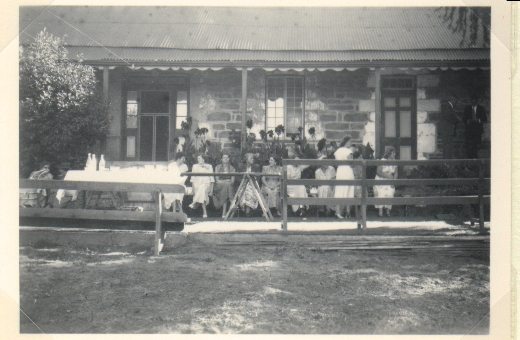
There were many children to help their parents work both properties, ‘Berry Hill’ and the newly purchased ‘Netherhill’. However, it wasn’t all work and no play. The Sandercocks enjoyed entertaining and there were dances held in the drawing room at ‘Netherhill’ about once a month on a full moon during winter. Local friends attending the dances included the Moores, Hannafords, Teakles, Kellys and Symonds. During World War One, fund raising events were often hosted at the house by Edie Sandercock. Later, a tennis court was installed at the front of the house and there were tennis parties with friends from around the district and Adelaide. Some of the Sandercock children became good tennis players.
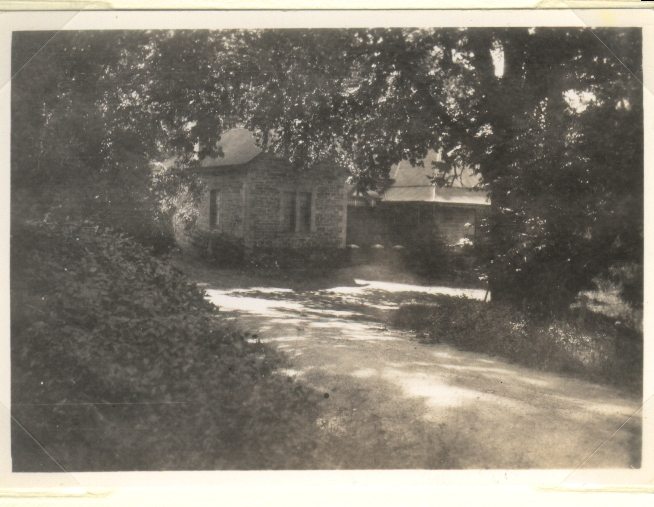
(Above, Old House)
In about 1914, a final ‘villa’ style extension completed the house. This date is confirmed by Elly Sandercock telling Margaret Reid he remembered the day when the ‘Netherhill’ stone was lifted into position on the gable above the front bedroom window. He said he was seven-years-old. The new extension consisted of two bedrooms and a large dining room. A large stone engraved with ‘Netherhill’ was mounted at the peak of the house, above the front bedroom. A porch area at the front, between the front bedroom and the lounge room, provided a sheltered space where some of the Sandercock children slept, year-round. This area was later enclosed and used as a sunroom, and much later in the 1970s it was converted to a well-placed, well-lit farm office. Elly said when he was a little boy, the back bedroom at the original end of the house was the ‘little boys’ bedroom’. In those days there was no door at the back of the house, so the boys would shoot through the window to get outside quickly. The scuff marks on the woodwork around the window can still be seen today. He also remembered when he was a boy, that flour bags would be stacked in the kitchen from the floor to the ceiling.

(Above, The rear view of the original end of the Netherhill house built in 1848. This is the window the Sandercock boys used to escape the house from.)
Initially, some of the verandas had slabs of granite which Elly said came out from England as ballast (possibly it was the sailing cutters?). The extra granite slabs went to the cottage which was built for one of the Sanderock children. It is possible the original kitchen floor could have had granite slabs, but there was no evidence of this. There were two small round rainwater tanks at each end of the house, they were circular stone bases with granite slabs. At the new end of the house, there used to be steps going down under the front bedroom window. This was changed to the ramp that exists today, to make it easier for Elly as he had developed arthritis.

(Above, Leo, Bessie and Colin Sandercock)
One wet days, Lionel Sandercock used to practice tennis against the wall in the main hallway. He must have put the ball through the led light glass in the front door, because in the 1970s it was found broken under the Norfolk pine tree near the old workshop. The glass had been replaced with thick, plain, translucent glass. Lionel also told Margaret that above the niche in the main hallway, there used to be an enormous set of bullock horns which Elly Sandercock donated to the Royal Adelaide Showgrounds. It has been questioned whether these could in fact be Rattler’s horns mentioned in the Ragless history book ‘Dust Storms in China Tea Cups’.
In 1910, it is recorded in The Observer that John Sandercock was farming 423-acres at Kenton Valley. He had a 30-acre orchard consisting of apples, pears, and plums, along with pomegranates, oranges, loquats, peaches and apricots. He had also concentrated on dairying and made butter which was sold in Adelaide. He introduced pure-bred milking Shorthorn cattle, which he considered to be the best in the district. They also bred horses and pigs, as well as wattle-growing which he’d done for many years. Around this time, he sowed 40-acres with wattle seed which he had saved. He proclaimed fruit production was the main industry at his Kenton Valley properties. He was quoted saying from the 30-acres of orchard, he received double what he made from the balance of the 423-acres. John Sandercock was 51 at the time and fit and healthy, which is described in the article:
“…his comparatively youthful appearance is a telling advertisement for the salubrious climate and the advantages of a vigorous life spent in the open air”.
Elly recalled his father being able to walk into Gumeracha through the back paddocks in as little as 20 minutes.
Vena Sandercock’s daughter, Margaret Peake (nee Langley) recalled visiting Netherhill when she was a young child:
“One of my earliest memories was after I had my tonsils out when I was two or three years of age … and can distinctly remember the jelly setting on the windowsills.”
John’s wife, Edie, died in 1923 when her youngest child, Ellis, was 17. John continued living at ‘Netherhill’ with his sixth son, Leo, and his wife Bessie (nee Crowhurst) for three years.
There was an old long drop toilet to the west of the house where the chook yard was later built in the 1970s. Lionel Sandercock said after this father’s retirement, John used to spend his summers at ‘Netherhill’ with Elly and Rita, and in winter he stayed at the YMCA in Adelaide. John lived in the three rooms in the new end and used the back bedroom as his kitchen and cooked over the open fire. Lionel remembered when his father went to the toilet, he would race out of the sunroom (office) door and high tail it down the veranda—which was quite a distance for an old man.
During World War Two there was a compulsory billeting system in place to help accommodate people. In later years a lady visited ‘Netherhill’ and told Margaret that she stayed there for 18 months during the war while were husband was away fighting. She and her baby lived in the sitting room and she looked after old Mr (John) Sandercock. She said she hated staying there and remembered it as always being cold. She used to bath the baby in front of the fire. She hated hanging out the clothes in the long, wet grass behind the house. She also used to cook for old Sandercock and he liked eating fatty lamb chops, which she didn’t approve of!
Leo and Bessie then purchased a property from the Coleman family and ran a dairy. Ellis, better known as Elly, married Rita Crowhurst in 1925. He was 19 and she was 18. Incidentally, three Sandercock brothers (Ralph, Leo and Ellis) married three Crowhurst sisters (Olive, Bessie and Rita). Elly leased ‘Netherhill’ from his father in 1927 at the age of 21. John continued living with Elly and Rita until his death in 1938, aged 80. Ralph (Denzil Sandercock’s father) was given 17-acres of land and built a house across from the ‘Netherhill’ homestead.
Elly and Rita had a family of two sons, Lionel (1926) and Ian (1931). Elly had inherited the ‘Netherhill’ homestead with 39-acres when his father died. He worked the property with his oldest son, Lionel. In 1951 Lionel married Beryl Bleeze of Gumeracha and they lived in the original end of the large ‘Netherhill’ house, while Elly and Rita lived in the newer end. Lionel and Beryl never had children. Elly and Rita’s youngest son, Ian, married Peggy Klose. He didn’t like milking cows, so Rita had him paint the house with all the bright colours that were popular at that time. Around the same time, they further modernised the house by lowering the high fire place in the sitting room up the original end and built in the huge fire place in the original kitchen. Ian and Peggy purchased a farming property in New South Wales and moved. Elly and Lionel continued farming ‘Netherhill’ for another 38 years, where they gradually changed from fruit growing to a mixed farming/dairying operation. Rita told Margaret Reid that Elly had worked at clearing the land at ‘Netherhill’ for years and it had “completely worn him out”. In 1974, after 76 years of ownership in the Sandercock family, ‘Netherhill’ (now 117.5 acres, less than half the original size when the John and Edie Sandercock purchased the property from the Lilliecrapps), was sold to Doug and Margaret Reid. Rita and Elly finally got to retire in Victor Harbor.

Sources:
-
Branching Out – The Family History of Richard and Elizabeth Sandercock and their Descendants, Thomas, N., 1981, Naracoorte Herald, Naracoorte, South Australia 5271
-
The Observer, Saturday 8th October, 1910
http://trove.nla.gov.au/newspaper/article/164708741?searchTerm=netherhill&searchLimits -
Recollections of stories by Lionel and Beryl and Elly and Rita Sandercock told to Margaret Reid